
Campaigns
Legislative & Policy Campaigns

The FREEDOM Act
The Islamic Republic relies on internet blackouts to stifle dissent and control information. Direct-to-cell satellite technology represents a promising innovation for future secure, independent communication channels that cannot easily be censored or shut down. The FREEDOM Act (H.R. 6469) ensures the U.S. government and Congress have the information to responsibly assess this technology's future applications, strengthen America's digital diplomacy, and advance freedom of expression and access to information abroad.
Campaign pageThe Islamic Republic relies on internet blackouts to stifle dissent and control information. Direct-to-cell satellite technology represents a promising innovation for future secure, independent communication channels that cannot easily be censored or shut down.
The FREEDOM Act (H.R. 6469) ensures the U.S. government and Congress have the information to responsibly assess this technology's future applications, strengthen America's digital diplomacy, and advance freedom of expression and access to information abroad.
Take Action
Button link (per language)What Does the FREEDOM Act Do?
- The Feasibility Review of Emerging Equipment for Digital Open Media (FREEDOM) Act would require the Department of State, in consultation with the Federal Communications Commission and the Department of the Treasury, to supplement the Section 5124 report to HFAC and SFRC by assessing:
- The feasibility of utilizing direct-to-cell technologies to promote internet freedom in Iran;
- Related technologies that could affect feasibility, such as drones and jamming;
- The role of terrestrial telecom providers and their implications for this technology; and
- Other relevant factors that could affect deployment and policy implications.
The Maximum Support Act
The Maximum Support Act (H.R. 2614) is bipartisan U.S. legislation designed to provide direct support to the Iranian people in their quest for democracy, human rights, and a free society. It emphasizes internet freedom, strategic support for democratic change, and targeted sanctions that prioritize regime officials over civilians. It insists on Iranians’ rights to choose their own, post-Islamic Republic form of government. The regime in Iran is at its weakest point in decades due to ongoing internal protests, setbacks experienced by its proxies like Hezbollah and the Houthis, and the resurgence of the maximum pressure policy initiated by President Trump. This presents an optimal moment for the United States to significantly bolster Iranian democratic aspirations.
Campaign pageThe Maximum Support Act (H.R. 2614) is bipartisan U.S. legislation designed to provide direct support to the Iranian people in their quest for democracy, human rights, and a free society. It emphasizes internet freedom, strategic support for democratic change, and targeted sanctions that prioritize regime officials over civilians. It insists on Iranians’ rights to choose their own, post-Islamic Republic form of government.
The regime in Iran is at its weakest point in decades due to ongoing internal protests, setbacks experienced by its proxies like Hezbollah and the Houthis, and the resurgence of the maximum pressure policy initiated by President Trump. This presents an optimal moment for the United States to significantly bolster Iranian democratic aspirations.
Take Action
Button link (per language)The Maximum Support Act (H.R. 2614)
Use the letter template below to reach out to your Congresspeople on your own or fill out the yellow section and NUFDI will reach out to your representative/Senator on your behalf.
Letter Template to Send to Your Congresspeople:
Subject: Please Co-sponsor the Maximum Support Act
Dear [Representative/Senator Last Name],
My name is [Your Name], and I am a constituent from [City, State]. I am writing to urge you to co-sponsor and support the Maximum Support Act, critical bipartisan legislation aimed at empowering the people of Iran in their fight for democracy, human rights, and freedom.
The Maximum Support Act proposes targeted measures including enhanced internet freedom initiatives, support for Iranian civil society and nonviolent activists, and comprehensive strategies to counter the Iranian regime’s censorship and human rights abuses. Specifically, the bill:
Establishes secure internet access through advanced VPNs and satellite-to-cell technology, protecting Iranians from government censorship.
Authorizes the confiscation of Iranian regime assets to fund humanitarian assistance, nonviolent protest support, and human rights documentation.
Strategically tightens sanctions against key regime economic sectors and evaluates a terrorist designation for Iran's Ministry of Intelligence and Security due to their documented involvement in global terrorism and repression.
As an Iranian-American, this bill holds profound personal significance for me because [briefly describe your personal connection, such as family experiences under regime oppression, personal or community impacts of regime censorship, or human rights abuses affecting loved ones].
By co-sponsoring the Maximum Support Act, you can make a clear stand for democracy, human rights, and freedom—values that align closely with the interests of your constituents and the core principles of our nation.
Thank you for your consideration. I would greatly appreciate your support and am eager to hear your position on this important piece of legislation.
Respectfully,
[Your Name] [Your Address] [City, State, Zip Code] [Your Contact Information]
Maximum Pressure Act (H.R. 2570)
NUFDI is proud to support the Maximum Pressure Act as a positive step towards establishing a new Iran policy that will finally end the threat of the Islamic Republic and support the democratic aspirations of the Iranian people.
Campaign pageNUFDI is proud to support the Maximum Pressure Act as a positive step towards establishing a new Iran policy that will finally end the threat of the Islamic Republic and support the democratic aspirations of the Iranian people.
Take Action
Button link (per language)Maximum Pressure Act (H.R. 2570)
The Maximum Pressure Act includes the following provisions:
- Declares that Iran is responsible for the October 7 terrorist attacks against Israel and that the only suitable punishment for these attacks is a return to maximum pressure on Iran
- Removes the limits on bounties for the capture of terrorist perpetrators of the October 7 massacre.
- Expands sanctions on Iran's ballistic missile program and sales to also include Iranian drones.
- Requires Treasury to blacklist all new banks in Iran not already sanctioned under E.O. 13902.
- Requires a report on Iranian intelligence and influence activities in the U.S., like the Iran Experts Initiative, and whether Iranian agents have been employed with the U.S. government.
- Requires a report on whether Iran sanctions relief has freed up resources for Iranian-backed terrorist groups and describing how much those groups have benefited from sanctions relief.
The IRAN Act
The Internet Reach and Access Now (IRAN) Act, first introduced in the 118th Congress and reintroduced in the 119th Congress as H.R. 7380, is a legislative effort aimed at promoting widespread internet freedom for the Iranian people, who have faced severe censorship and blackouts imposed by the Islamic Republic. This legislation aligns closely with broader U.S. policies focused on supporting human rights and democratic change in Iran. By providing Iranian civilians with the tools they need to access uncensored information and stay connected, the IRAN Act offers critical support to those seeking to resist regime repression.
Campaign pageThe Internet Reach and Access Now (IRAN) Act, first introduced in the 118th Congress and reintroduced in the 119th Congress as H.R. 7380, is a legislative effort aimed at promoting widespread internet freedom for the Iranian people, who have faced severe censorship and blackouts imposed by the Islamic Republic.
This legislation aligns closely with broader U.S. policies focused on supporting human rights and democratic change in Iran. By providing Iranian civilians with the tools they need to access uncensored information and stay connected, the IRAN Act offers critical support to those seeking to resist regime repression.
Take Action
Button link (per language)Key Provisions of the IRAN Act
- Comprehensive Internet Freedom Strategy: The IRAN Act mandates that the U.S. Secretary of State lead the development and coordination of a strategy to promote unrestricted internet access for civilians in Iran. This builds upon the existing Iran Threat Reduction and Syria Human Rights Act of 2012, ensuring a sustained focus on internet freedom and access to information.
- Circumventing Internet Blackouts: The IRAN Act calls for the development of strategies to bypass the regime's frequent internet blackouts, which are often imposed during protests or periods of heightened dissent. These tools will assist Iranian activists and civil society in organizing and communicating even when the regime attempts to silence them.
- Regular Strategy Updates: The legislation mandates periodic updates to the comprehensive internet freedom strategy, ensuring that U.S. efforts remain adaptive to the regime's evolving tactics for suppressing free speech and access to information.
- Guidance on Access to Technology: The bill requires the U.S. Department of the Treasury to ensure that sanctions enforcement does not prevent companies from providing necessary internet access tools, such as VPNs and secure messaging platforms, to the Iranian people. This provision is essential to maintaining the flow of information in a highly censored environment.
- This does not mean lifting or weakening sanctions. Instead, it aims to ensure that sanctions remain targeted and precise—punishing the regime and its enablers while allowing civilians access to tools for communication and self-organization.
Supporting the Iranian People’s Fight for Freedom
In the broader context of U.S. policy toward Iran, the IRAN Act represents a vital component of the ongoing efforts to maximize support for the Iranian people. The concept of "Maximum Support", as advocated by NUFDI and FDD, focuses on empowering Iranian civilians by providing them with the resources and tools needed to resist the regime’s repression and reclaim Iran. The IRAN Act specifically addresses one of the most critical elements of this support: internet freedom.
In a society where the regime routinely imposes information blackouts and censors communication, access to an open and secure internet becomes a lifeline. It allows protesters to organize, activists to amplify their messages, and ordinary citizens to communicate with the outside world. In this way, internet freedom is not merely a technical issue but a core element of the Iranian people's ability to challenge the regime and advocate for their rights.
By securing unrestricted access to the internet, the IRAN Act directly aligns with objectives of Maximum Support, ensuring that Iranians have the digital tools needed to coordinate resistance efforts, share information about regime abuses, and build solidarity both within Iran and with the global community.
House vs. Senate Versions of the IRAN Act
- Earlier House Version, 118th Congress (H.R. 9299):
- Focuses on coordinating U.S. government efforts to promote internet freedom for Iranian civilians.
- Requires updates to the internet freedom strategy but does not allocate specific funding for these initiatives.
- Earlier Senate Version, 118th Congress (S. 5076):
- Includes all the provisions in the House version, but also authorizes $30 million in funding for grants to support internet freedom programs in Iran.
- Mandates security audits for the technologies provided to ensure their integrity and safety from compromise by the regime.
- These funding and security provisions make the Senate version more comprehensive, providing the financial backing necessary for scaling efforts and safeguarding the technology used by Iranian activists and civil society.
The IRAN Act can play a critical role in the United States' broader strategy of maximizing support for the Iranian people. By promoting internet freedom, the Act provides Iranians with the tools they need to stay connected and resist the regime’s efforts to isolate and silence them. In a country where internet access is often weaponized by the government, ensuring secure, open, and reliable communication channels is essential for any pro-democracy movement.
The Senate version of the bill, with its $30 million funding provision and added security measures, offers the strongest path forward for implementing these changes. Supporting the IRAN Act, particularly the Senate version, aligns directly with the goals of the Maximum Support Strategy, empowering the Iranian people to pursue their democratic aspirations in the face of repression.

The MAHSA Act
The MAHSA Act is the first legislation focused on human rights in Iran that has the enthusiastic support of the majority of Iranian-Americans. The act mandates that the U.S. administration directly sanction senior Islamic Republic officials for human rights abuses, including Ali Khamenei, then the Supreme Leader. The Iranian-American community’s advocacy campaign for the MAHSA Act has also created a wide-spread network of activists with newly acquired skills.
Campaign pageThe MAHSA Act is the first legislation focused on human rights in Iran that has the enthusiastic support of the majority of Iranian-Americans. The act mandates that the U.S. administration directly sanction senior Islamic Republic officials for human rights abuses, including Ali Khamenei, then the Supreme Leader.
The Iranian-American community’s advocacy campaign for the MAHSA Act has also created a wide-spread network of activists with newly acquired skills.
Take Action
Button link (per language)The MAHSA Act specifically targets
- The Supreme Leader of Iran and any official in the Office of the Supreme Leader of Iran
- The President of Iran and any official in the Office of the President of Iran
- Any entity that is overseen by the Office of the Supreme Leader of Iran that is complicit in supporting human rights abuses or terrorism
The MAHSA Act employs the use of three existing Executive Orders and the included sanctions authorities:
- Executive Order 13224 (Bush Administration)
- Executive Order 13553 (Obama Administration)
- Executive Order 13818 (Trump Administration)
- Existing sanctions in CAATSA.
Sanction Human Rights Abusers
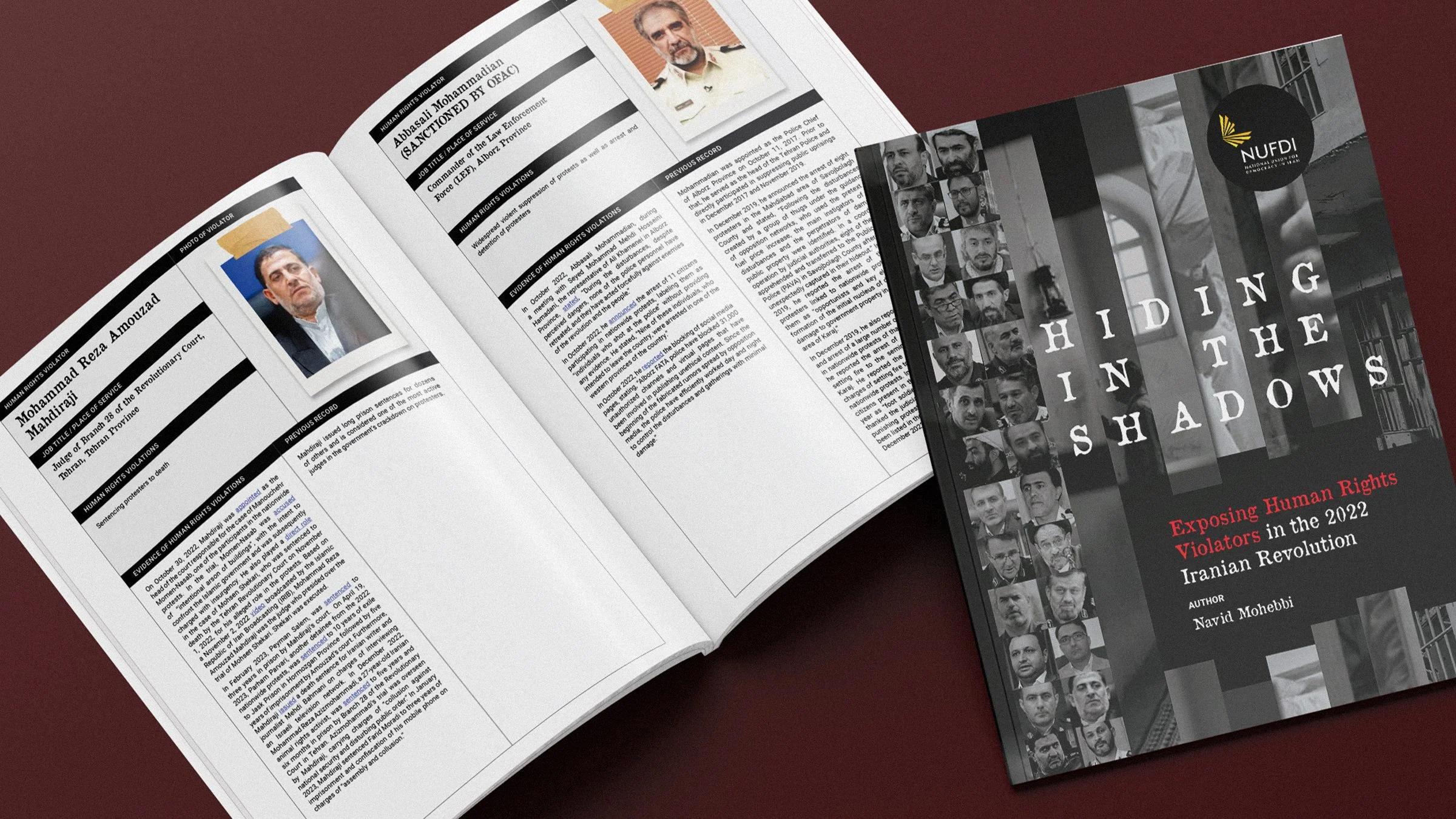
NUFDI has identified over 100 judicial, security, and other officials of the Islamic Republic at the national, provincial, and local level involved in crimes against humanity since Mahsa Amini’s murder.
Campaign pageNUFDI has identified over 100 judicial, security, and other officials of the Islamic Republic at the national, provincial, and local level involved in crimes against humanity since Mahsa Amini’s murder.
Take Action
Button link (per language)NUFDI has identified over 100 judicial, security and other officials of the Islamic Republic at the national, provincial and local level involved in crimes against humanity since Mahsa Amini's murder in this report.
Fill out the form to let your representative know you support sanctioning mid- to high-level Islamic Republic officials responsible for human rights abuses against Iranian protesters.
Hold the Regime Accountable for its Hostage-taking
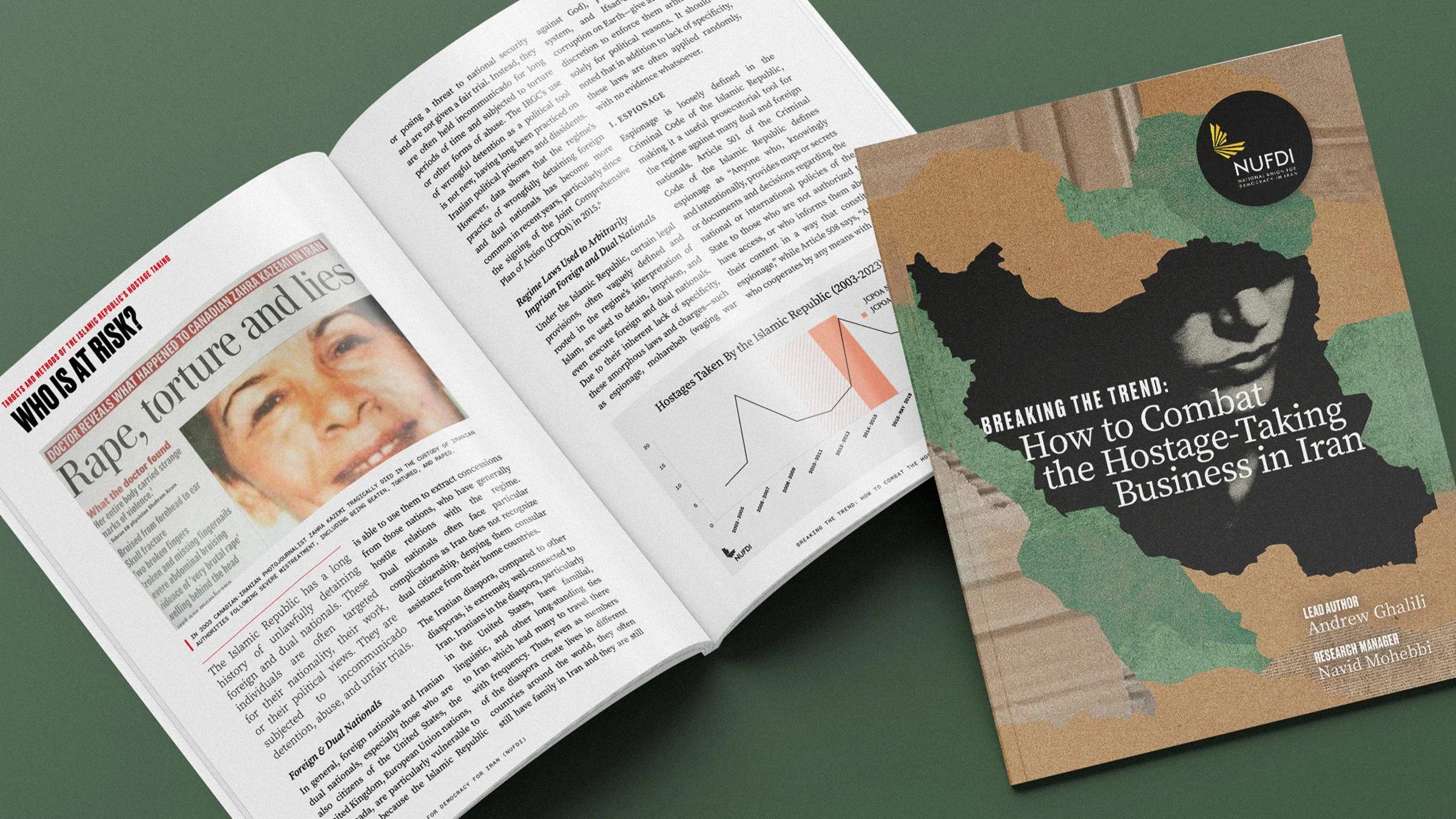
NUFDI published an extensive report detailing the Islamic Republic’s hostage-taking business and provided several policy recommendations to deter the regime from continuing this practice. These include: Messaging that punitive measures against Iran are being taken because of its hostage-taking Banning travel for regime officials to the U.S. Establishing a comprehensive register of regime hostage takers Banning the use of U.S. passports for travel to or through Iran No Paydays for Hostage-Takers Act (H.R. 2619)
Campaign pageNUFDI published an extensive report detailing the Islamic Republic’s hostage-taking business and provided several policy recommendations to deter the regime from continuing this practice. These include:
- Messaging that punitive measures against Iran are being taken because of its hostage-taking
- Banning travel for regime officials to the U.S.
- Establishing a comprehensive register of regime hostage takers
- Banning the use of U.S. passports for travel to or through Iran
- No Paydays for Hostage-Takers Act (H.R. 2619)
Take Action
Button link (per language)NUFDI published an extensive report detailing the Islamic Republic's hostage-taking business and provided several policy recommendations to deter the regime from continuing this practice. These include:
- Messaging that punitive measures against Iran are being taken because of its hostage-taking
- Banning travel for regime officials to the U.S.
- Establishing a comprehensive register of regime hostage takers
- Banning the use of U.S. passports for travel to or through Iran
- No Paydays for Hostage-Takers Act (H.R. 2619)
Maximum Support
Not on the campaigns pageMarch 13, 2023 · Report
On March 13, 2023, NUFDI unveiled and rolled out #MaximumSupport, our strategic policy initiative.
This 15-point policy was developed in 2023 in conjunction with leading think tank experts across the ideological spectrum and leading Iranian activists inside and outside of Iran.
Maximum Support, a complement to maximum pressure, offers a new strategic direction for Iran policy that can guide various executive departments, Congress, and a future administration on how to support the Iranian people in their democratic aspirations. This third way for U.S.-Iran policy is in the best interest of the Iranian people and the United States.
For press inquiries contact press@nufdiran.org.

The FREEDOM Act
The Islamic Republic relies on internet blackouts to stifle dissent and control information. Direct-to-cell satellite technology represents a promising innovation for future secure, independent communication channels that cannot easily be censored or shut down.
The FREEDOM Act (H.R. 6469) ensures the U.S. government and Congress have the information to responsibly assess this technology's future applications, strengthen America's digital diplomacy, and advance freedom of expression and access to information abroad.
The Maximum Support Act
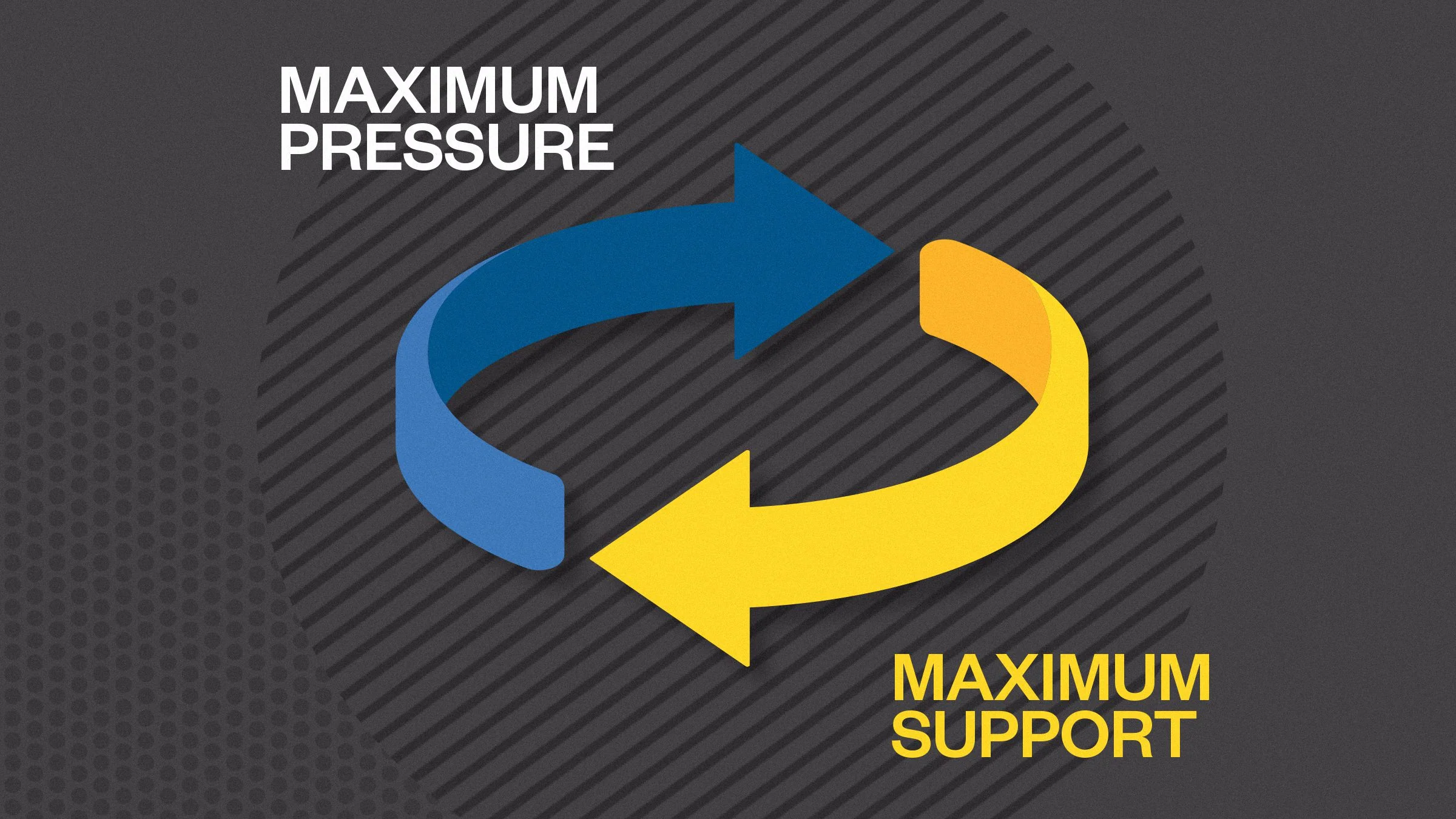
The Maximum Support Act (H.R. 2614) is bipartisan U.S. legislation designed to provide direct support to the Iranian people in their quest for democracy, human rights, and a free society. It emphasizes internet freedom, strategic support for democratic change, and targeted sanctions that prioritize regime officials over civilians. It insists on Iranians’ rights to choose their own, post-Islamic Republic form of government.
The regime in Iran is at its weakest point in decades due to ongoing internal protests, setbacks experienced by its proxies like Hezbollah and the Houthis, and the resurgence of the maximum pressure policy initiated by President Trump. This presents an optimal moment for the United States to significantly bolster Iranian democratic aspirations.
Maximum Pressure Act (H.R. 2570)
NUFDI is proud to support the Maximum Pressure Act as a positive step towards establishing a new Iran policy that will finally end the threat of the Islamic Republic and support the democratic aspirations of the Iranian people.
The IRAN Act
The Internet Reach and Access Now (IRAN) Act, first introduced in the 118th Congress and reintroduced in the 119th Congress as H.R. 7380, is a legislative effort aimed at promoting widespread internet freedom for the Iranian people, who have faced severe censorship and blackouts imposed by the Islamic Republic.
This legislation aligns closely with broader U.S. policies focused on supporting human rights and democratic change in Iran. By providing Iranian civilians with the tools they need to access uncensored information and stay connected, the IRAN Act offers critical support to those seeking to resist regime repression.

The MAHSA Act
The MAHSA Act is the first legislation focused on human rights in Iran that has the enthusiastic support of the majority of Iranian-Americans. The act mandates that the U.S. administration directly sanction senior Islamic Republic officials for human rights abuses, including Ali Khamenei, then the Supreme Leader.
The Iranian-American community’s advocacy campaign for the MAHSA Act has also created a wide-spread network of activists with newly acquired skills.
Sanction Human Rights Abusers
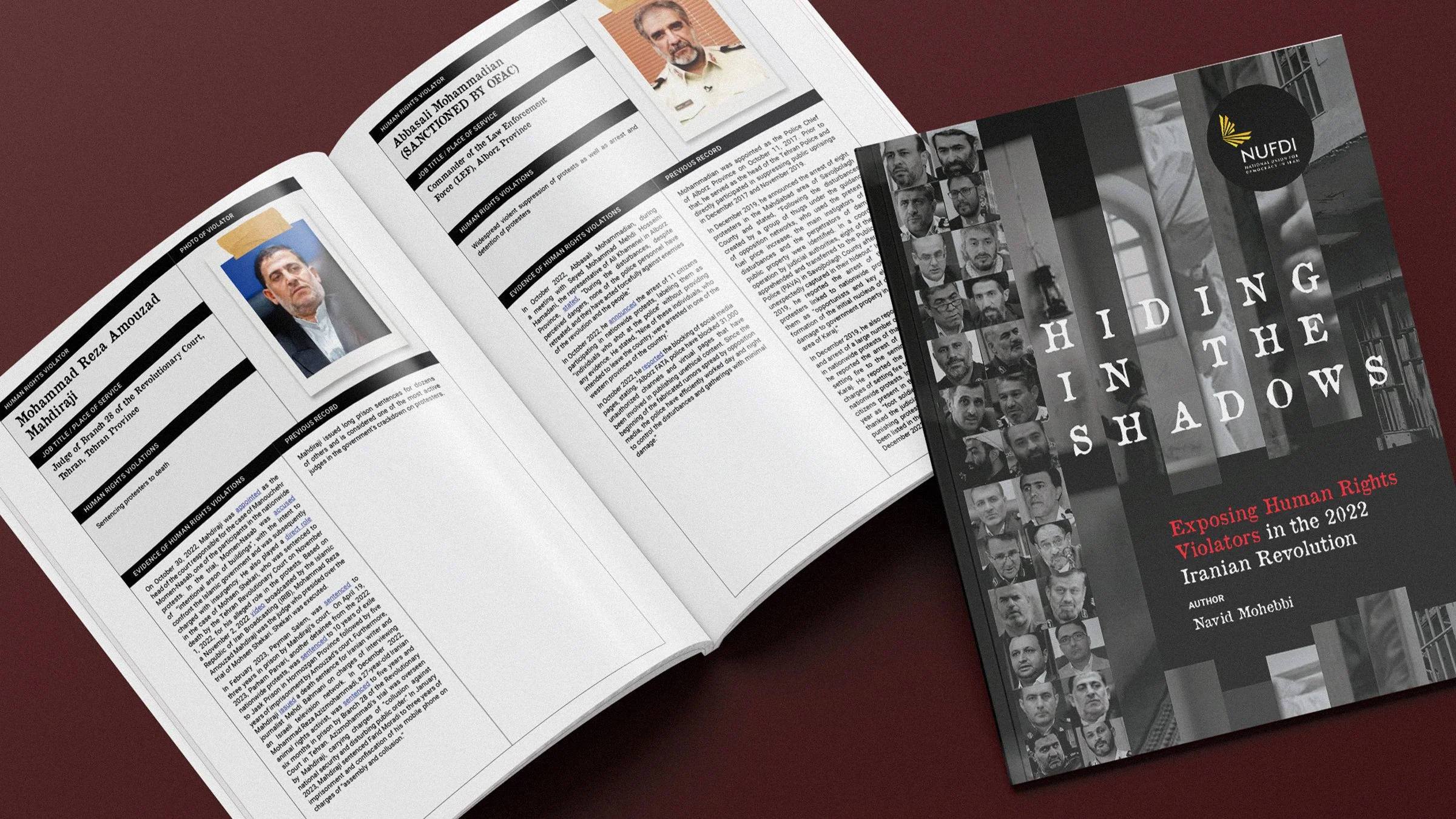
NUFDI has identified over 100 judicial, security, and other officials of the Islamic Republic at the national, provincial, and local level involved in crimes against humanity since Mahsa Amini’s murder.
Hold the Regime Accountable for its Hostage-taking
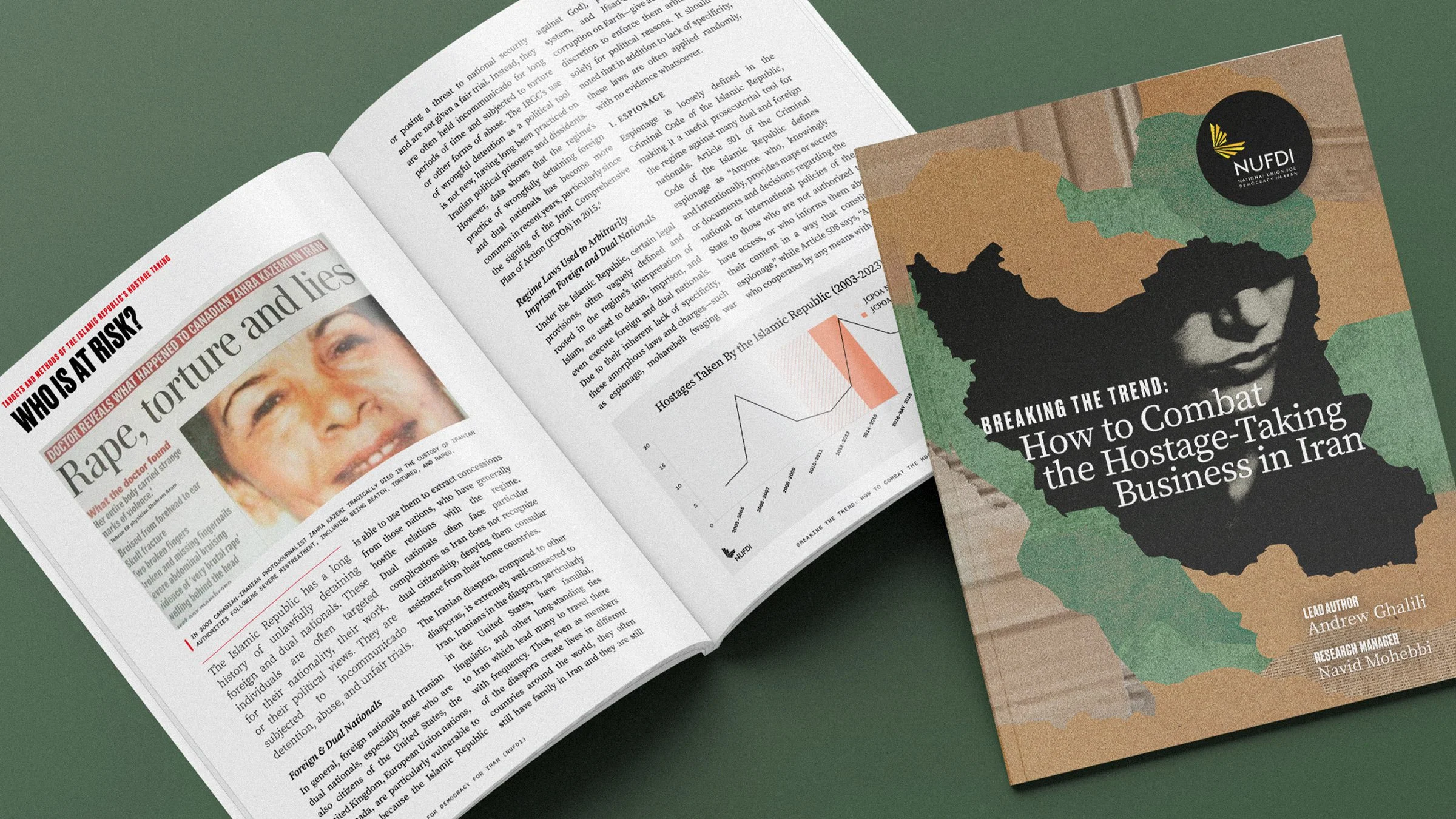
NUFDI published an extensive report detailing the Islamic Republic’s hostage-taking business and provided several policy recommendations to deter the regime from continuing this practice. These include:
- Messaging that punitive measures against Iran are being taken because of its hostage-taking
- Banning travel for regime officials to the U.S.
- Establishing a comprehensive register of regime hostage takers
- Banning the use of U.S. passports for travel to or through Iran
- No Paydays for Hostage-Takers Act (H.R. 2619)
Read it? Now act on it.